Summer Is Not a Second School Year: A Summer Reset for IEP & 504 Parents
As the school year comes to an end, many parents of children with IEPs and 504 Plans find themselves carrying two competing thoughts.
The first is relief.
The second is worry.
Will my child lose skills over the summer?
Should we be doing more?
Do I need to spend the next two months preparing for next school year?
If you’ve ever felt this tension, you are not alone.
Many families feel pressure to turn summer into a second school year filled with workbooks, tutoring, academic drills, and constant concern about regression.
But summer was never intended to be that.
Summer should include rest.
Summer should include family.
Summer should include connection, play, growth, and opportunities for children to develop outside of the classroom.
That doesn’t mean parents should ignore school entirely. It simply means there is a healthier approach.
Instead of turning summer into school, consider using it as a reset.
Why a Summer Reset Matters
The end of the school year often brings home report cards, IEP progress reports, evaluations, accommodation plans, teacher notes, behavior data, and countless pieces of information about your child’s year.
Before the rush of August arrives, summer provides something many families rarely have during the school year:
Time.
Time to pause.
Time to reflect.
Time to organize.
Time to think about what worked and what still needs attention.
A summer reset is not about spending every day focused on school paperwork.
It’s about setting aside a small amount of time now so you can begin next year feeling more confident and prepared.
Step 1: Gather the Documents That Tell Your Child’s Story
One of the simplest things parents can do during the summer is organize important records.
You don’t need every worksheet or school paper your child has ever received.
Instead, gather documents that help tell the story of this school year:
·Current IEP or 504 Plan
·Most recent evaluation reports
·Progress reports
·Report cards
·Accommodation lists
·Behavior plans
·Relevant emails or meeting notes
·Work samples that demonstrate growth or continued struggles
Having these documents in one place makes future conversations easier and reduces stress when meetings arise.
Step 2: Celebrate Growth Before Focusing on Concerns
Parents often move immediately to what isn’t working.
But before reviewing challenges, take a moment to recognize growth.
Ask yourself:
·What new skills did my child develop this year?
·What became easier?
·What helped them feel successful?
·What strengths should next year’s teachers know about?
Growth doesn’t always show up in grades or test scores.
Sometimes growth looks like:
·Increased confidence
·Better self-advocacy
·Improved friendships
·Greater independence
·More resilience after setbacks
Those victories matter too.
Step 3: Identify Concerns Without Carrying Them All Summer
A summer reset also creates space to thoughtfully consider areas that may still need attention.
You might ask:
·Were accommodations provided consistently?
·Did certain IEP goals show limited progress?
·Were there recurring concerns about anxiety, organization, communication, reading, writing, or social skills?
·Is there something you wish had been discussed more fully this year?
The goal is not to spend the summer worrying.
The goal is simply to identify concerns while they are fresh so you can revisit them when school begins.
Step 4: Review the Plan
Summer can be an excellent time to review your child’s IEP or 504 Plan with fresh eyes.
For IEP families, consider:
·Do the goals still reflect current needs?
·Do you understand how progress was measured?
·Do the accommodations and services still make sense?
For 504 families, ask:
·Are accommodations still appropriate?
·Were they consistently provided?
·Have your child’s needs changed?
When parents review plans outside the pressure of an ARD or 504 meeting, questions often become much clearer.
Step 5: Prepare a Simple Back-to-School Snapshot
One of the most valuable things you can do is create a short summary for yourself.
Think about:
·Your child’s strengths
·Supports that worked well
·Concerns you want to monitor
·Questions you may want to ask
·Documents you still need
This simple preparation can save hours of stress once school resumes.
Remember: Summer Is About More Than Academics
Children learn important skills during the summer that don’t always appear on progress reports.
They learn through:
·Family experiences
·Camps
·Community activities
·Friendships
·Independent exploration
·Play
Social skills, confidence, flexibility, emotional regulation, and self-advocacy often grow significantly during the summer months.
Those gains matter just as much as academic progress.
A Little Preparation Can Bring a Lot of Clarity
You do not need to spend your summer becoming an expert in special education.
You do not need to recreate school at home.
And you do not need to carry the weight of next school year today.
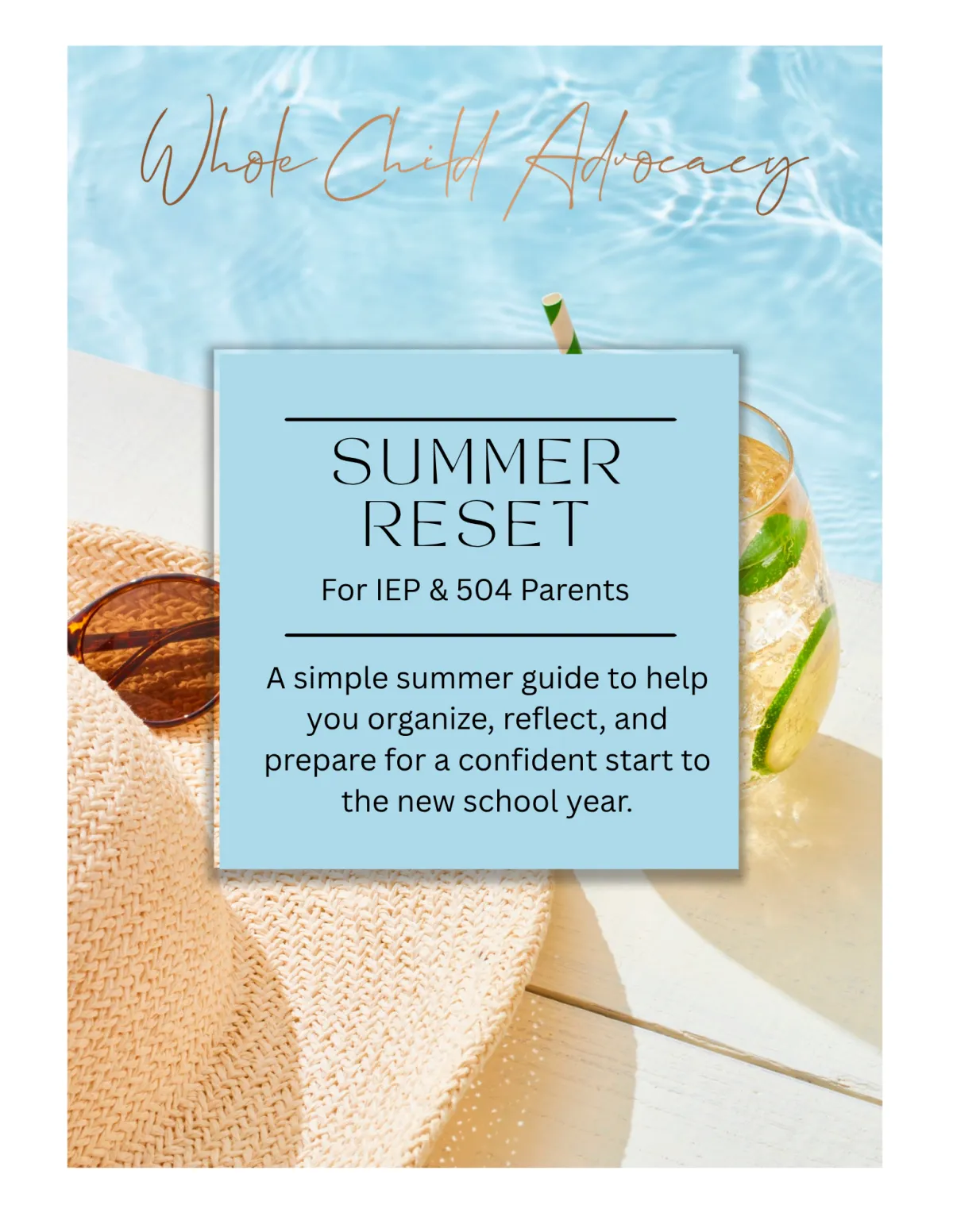
A simple summer reset can help you organize your thoughts, celebrate your child’s growth, identify important questions, and begin the new school year with greater confidence. I've created a great resource complete with checklist / notes / details on the plan described in this blog, which can be accessed for free on our member site: Whole Child Collective (link is below).
Ready for More Support?
If you’re looking for resources, encouragement, practical tools, and a community of parents walking a similar journey, we would love to welcome you to the Whole Child Collective.
Inside you’ll find parent-friendly resources, advocacy tools, courses, discussions, and support designed specifically for families navigating IEPs and 504 Plans.
Join us here:
https://www.skool.com/wholechildadvocacy/about
Because no parent should have to navigate this journey alone.


